Waldo's Gutbucket Syncopators – Hot Jazz Vol. One

There are certain Columbus musicians who don’t draw attention to themselves so much as quietly build something substantial—an indelible legacy you only start to notice once you’ve been paying attention for a while. I wasn’t thinking about that on the February night my wife and I spent in Manhattan's West Village, sitting in Arthur’s Tavern, but I probably should have been. We were there to see Terry Waldo.
G.H.B. - GHB-55
1971

That night, we saw Waldo leading his Gotham City Band through a set that felt less like a revival than a continuation—loose, conversational, and completely unselfconscious about the history it carries. Afterward, I introduced myself, mentioned Columbus, and that was enough to start a longer conversation that we picked up again a month later over Zoom.
Although Waldo has spent decades in New York reviving and sustaining a style that’s always in danger of being treated like a museum piece, he’s quick to maintain his Columbus roots. “No, no—I did most of my stuff from Columbus,” he told me, almost as a correction. But talking with him recently, what stood out wasn’t nostalgia—it was how much of Waldo's story is rooted in Columbus, a connection that remained strong when he recorded Waldo’s Gutbucket Syncopators Hot Jazz Volume 1, his debut album.
Waldo moved to Columbus as a child—“I was born in Ironton, Ohio. We moved to Columbus in 1950, and we had a little house on Blenheim”—and came up in Clintonville at a time when access to early jazz history wasn’t commoditized, it was personal. “Living across the street from me was John Baker,” he said. “He had all these records. And then he also became the first and premier collector of what he called jazz films.”
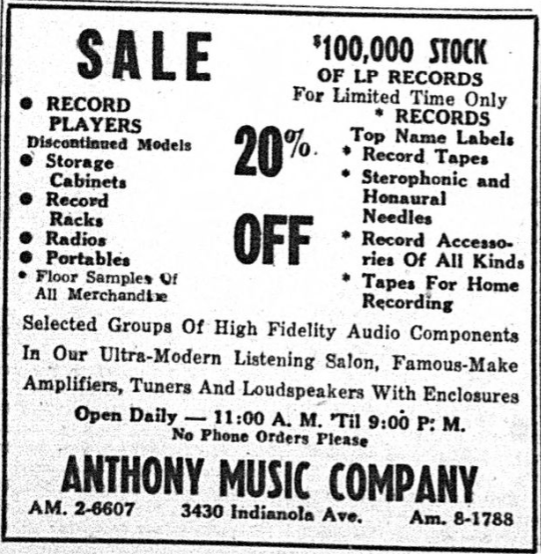
Also nearby was what Waldo describes, without exaggeration, as “the world's largest record store. This is in Columbus, Ohio. And just happened to be 4 blocks from my home. And they bought 2 copies of every record that was made anywhere in the world," he told me. When the family moved to Upper Arlington, not far away another collector specialized in cylinder recordings.

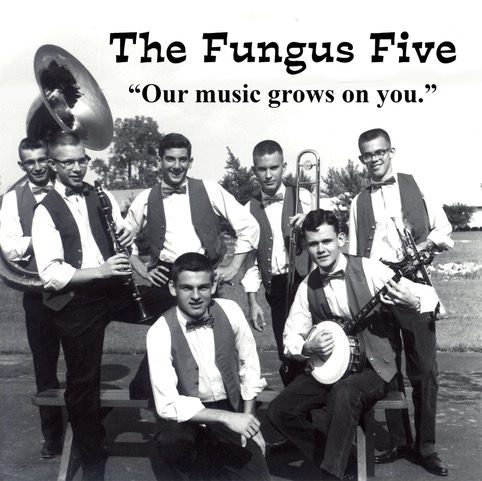
Waldo began playing instruments at an early age. He started on piano in elementary school, eventually moving through a range of instruments—most notably tuba, which he played in his high school marching band. When he couldn’t find a banjo player for a group he was putting together, he became one himself. "So my high school band was called The Fungus Five Plus Two. 'Our music grows on you.' That was our motto. And we were on Ted Mack's Original Amateur Hour, in… October of 1963," he told me.


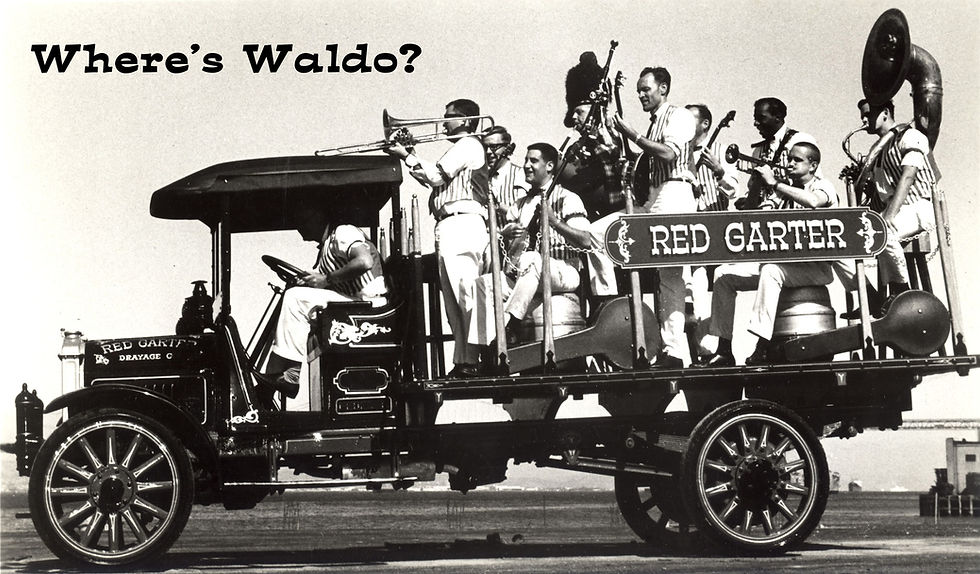
After high school, he was already working—first with the Red Garter in New Orleans, where he rotated through the lineup in a working band environment that kept the music going continuously. "So, I went down to New Orleans, and I got to play with all the old guys down there. You know, the guys who were playing in Preservation Hall, and all of that," Waldo said.
"In 1965, I went out to San Francisco, because I could play with the Red Garter out there, I had work out there. And, I had heard the records of Turk Murphy and Lu Watters and all of those things. You know, I'd listened to those records in high school. Those were very influential on me, so… I got a room over top of Turk Murphy's jazz club, Earthquake McGoon's. And Turk gave me a room for 30 bucks a month."
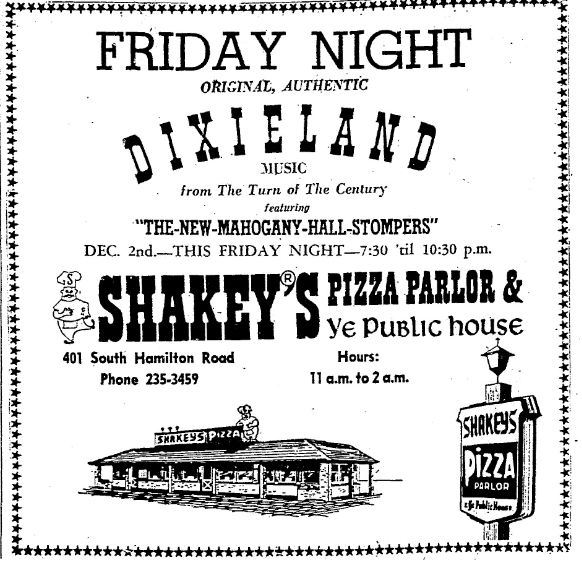

Late in 1966, Terry formed the New Mahogany Hall Stompers, who played regularly at Shakey's Pizza. Despite it all, Waldo's ambition was to be a filmmaker. "In 1967 I started to get my master's from Ohio State University, and I got my master's degree in 1970, and I was gonna go out to California and go get my PhD at one of the good film schools. But I was being drafted for Vietnam. My number came up, and I was within a month of being too old to be drafted... So I managed to get into the Army band reserve unit in Columbus, Ohio. And, you know, that was basically a band that, two weeks out of the year, we'd go to camp, and… learn how to fire rifles and all that sort of stuff. But anyway, I had to join them... Every two weeks, we'd go… Saturday and Sunday, and basically we'd sit around and play marches and stuff. And I played offensive tuba with them," Waldo said with a wry smile.
1968 brought Waldo's Columbus Ragtimers, who had a steady gig at Bimbo's south of campus. Then came the Gutbucket Syncopators. The early versions of the Syncopators drew from players across Ohio—Dayton, Cincinnati, Columbus—pulling from an existing network of traditional jazz musicians and bands that had been active in the region for decades. "I ended up using Frank Powers, who was the clarinet player with the Queen City Jazz Band from Cincinnati," Terry said. "He was the basis of the Gutbucket Syncopators when we formed that."

The first incarnation of the Syncopators in 1969 included Steve Ley on trombone and Fred Gary on piano with Waldo holding down the tuba spot. Terry took over piano duties when Fred Gary left the group. Bob Butters took the trombone slot from the departing Ley.
Recorded on April 19, 1970, according to the liner notes, and released on G.H.B. Records—the label run by George H. Buck, Jr. best known for documenting New Orleans-style jazz—the album has the feel of musicians who understand the language deeply enough not to treat it reverently. There’s no sense of it being a “project.” If anything, it sounds like a document of something already in motion.
Waldo didn’t spend much time on the session itself when we spoke, but one detail lingered. The band, he said, sat in a circle while they recorded the first session. No isolation, no assembling parts later—just players facing each other, listening closely.

"It took a couple of sessions, just because the way that band works is the front line has to be on the front line, because our trumpet player, Roy Tate, sometimes… he plays behind the beat. He plays with, you know, putting the center of it in different places, and when we first recorded, we had all of us sitting in a circle. And it turned out that the rhythm… having the front line right in our faces dragged down; the tempo would tend to go down. We learned that in our first recording sessions," Terry recalled.

It explains a lot about how the record sounds. There’s a looseness to it, but also a kind of collective focus that comes from everyone hearing the same thing at the same time. You’re not listening to a performance assembled in the studio; you’re hearing a group of players working something out together, in real time.

Too often, recordings like this get framed as revivalist gestures, as if they’re reacting to something that had already disappeared. But Waldo’s experience in Columbus complicates that idea. The music hadn’t vanished—it had narrowed, maybe, into smaller and more dedicated circles. What Hot Jazz Volume 1 captures is one of those circles, mid-conversation.
Listening now, Waldo’s Gutbucket Syncopators Hot Jazz Volume 1 doesn’t feel like a starting point so much as a moment pulled from an ongoing thread—something already unfolding before the tape started rolling and continuing long after. Columbus isn’t often positioned as part of that story, at least not in any sustained way. But Waldo’s path suggests that maybe it should be-a city where this music didn’t need to be rediscovered because, in small but meaningful ways, it never quite went away.
"You guys are obviously doing it for all the right reasons, and you really can tell that you love what you're doing," I said before we ended the Zoom call.
"Well, I owe it all to Columbus," he replied.
Tracklist

HERE COMES THE HOT TAMALE MAN, written circa 1925 was a pop tune which received notice because of two recordings by the DOC COOK ORCHESTRA OF CHICAGO, which included famous New Orleans trumpeter Freddie Keppard Cook recorded the piece twice, once in June, 1926 with a small group out of his band (COOKIE'S GINGERSNAPS) and again in July, 1926 with the larger DOC COOK ORCHESTRA. In this arrangement, the Syncopators evidence a swinging quality seldom found in renditions of this number.
KISS ME SWEET was written around 1923 by A. J. Piron and Steve Lewis, two fine New Orleans musicians. Lewis was the pianist in PIRON'S NEW ORLEANS ORCHESTRA which recorded the number in 1923 and again in 1924. The later version remained unissued. Butterbeans and Susie, a vaudeville singing team, also recorded the tune in 1924 accompanied by Clarence Williams and King Oliver.

ORIGINAL RAGS, written in 1899 was Scott Joplin's first published rag. It was recorded by Jelly Roll Morton as late as 1939. Morton often used this tune to demonstrate his alleged transformation of ragtime to jazz. Here we have the rag played with jazz band instrumentation and building the same feeling of momentum and exhilaration as the piano version.

HESITATION BLUES is a fine old blues copyrighted in 1926 by Billy Smythe, Scott Middleton, and Art Gillham, which has not, until now, produced a recording worthy of it. It is sometimes confused with HESITATING BLUES, written by W. C. Handy, although the melody and lyrics are different. This version of HESITATION BLUES may well be the best recording made to date, and is certainly one of the high points of the album. All of the ensembles and solos capture much of the intensity of the best in traditional jazz.

SOUTHERN STOMPS, copywrited circa 1923, was written by Richard M. Jones, pianist and composer of a number of piano pieces and Dave Peyton, leader of PEYTON'S SYMPHONIC SYNCOPATORS, a band which at one time included King Oliver. Oliver's band recorded this number in 1923. Much of the feeling and sensitivity of the Oliver performance has been retained in this arrangment.
BROADWAY ROSE is a pop tune that was recorded in 1920 by the ORIGINAL DIXIELAND JAZZ BAND. This is probably its first recording since that time.
BLACK BOTTOM STOMP, written by Jelly Roll Morton and recorded by his RED HOT PEPPERS in 1926, remains a jazz classic. It was also recorded in 1926 by RED AND MIFF'S STOMPERS. This version closely follows the Morton arrangement, retaining all of the vitality and drive inherent in the tune.
B2 The Mooche
WHY COULDN'T IT BE POOR LITTLE ME was written by Isham Jones around 1924 and was originally recorded by Fletcher Henderson in 1925 with a young Louis Armstrong on trumpet. Later that same year in was recorded by Muggsy Spanier and THE STOMP SIX. This mid-twenties pop tune was revived in 1933 by Benny Goodman who made a fine recording of it with his orchestra which included Jack Teagarden.
DEEP HENDERSON, copywrited in 1926, became a standard instrumental feature of the 1920's. It was recorded by the COON-SANDERS ORCHESTRA in April of that year. The numerous breaks and strains in this Frank Powers arrangement are a challenge to a band's ability to maintain a high level of enthusiasm and movement.
ENTERTAINER'S RAG, written by Jay Roberts and copywrited in 1912, is one of the more obscure rags. This piano number has sometimes been confused with the more popular Scott Joplin number, THE ENTERTAINER. This version, one of the few recorded performances of the rag, features Terry Waldo on piano.
B6 Stampede
STAMPEDE, written by Fletcher Henderson, was recorded by his orchestra in 1926 and also by the SAVOY BEARCATS in that same year. The JEAN GOLDKETTE ORCHESTRA with Bix recorded it in 1927 but it was unfortunately, never issued. Red Nichols and Miff Mole also recorded it in 1926 as RED AND MIFF'S STOMPERS. Henderson again recorded the tune in 1937. The number of recordings of this fine jazz composition and the calibre of the recording artists attest to its quality. This version by WALDO'S GUTBUCKET SYNCOPATORS carries on the tradition and retains all the fire and exuberance of the original. Some will find it the most exciting cut on the album. – Bob Fertig

Credits
Piano – Terry Waldo
Clarinet – Frank Powers
Trumpet – Roy Tate
Trombone – Bob Butters
Tenor Banjo – Jim Marshall
Tuba – Blaine "Kid" Garver
Drums – Tom Hyer
Engineer – Bill Finan
Liner Notes – George H. Buck, Jr.
Text By – Bob Fertig


Comments