KoKo-PoP

For a certain generation of musicians, Motown wasn’t just a label. It was the destination. For Columbus producer and saxophonist Chris Powell, signing with Motown had been the dream since childhood. By the time that dream became reality in 1984, he’d already traveled a path that most musicians would have considered a successful career in itself: his earlier band Nytro had signed with legendary songwriter/producer Norman Whitfield in the late 1970s, he had toured with Rick James and Teena Marie, and he had built relationships that connected Columbus funk to the upper tiers of the music business.
KoKo-PoP
Motown – 6096ML
1984

Koko-Pop, the self-titled debut from Powell’s Motown band, sits in a space between achievement and unrealized potential. It’s a fascinating Columbus artifact partly because of what it is—a polished, funky, highly professional mid-80s R&B record—and partly because of what it represents: the culmination of a dream that, depending on who’s telling the story, may also have been a costly gamble.

The band didn’t start as Koko-Pop. Powell’s original project was called Renegade, built around a set of demos that started to circulate beyond Columbus. When Powell started touring with Rick James as part of the Punk Funk Horns, those recordings caught attention from both James and Teena Marie.

Teena Marie brought members of the group—guitarist Keith Alexander, bassist/vocalist Recco Philmore, and drummer Timmy Houpe—to Los Angeles. They lived at her house. Alexander and Philmore ended up performing on Marie's 1983 album Robbery. Powell began rerecording his demos in Marie's house. Eventually, both Marie and Rick James offered Powell deals for the project captured on those demos.
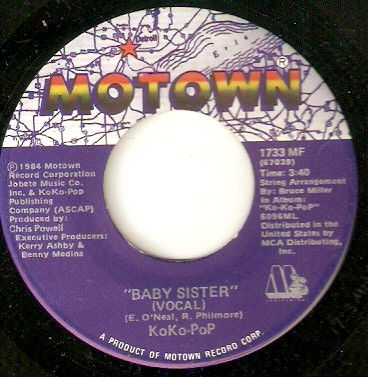
At some point in that process, Benny Medina—then head of A&R at Motown—heard the demos. A deal followed. Renegade became Koko-Pop, and Powell secured a two-album agreement with himself as producer. Dream achieved—but with complications. Koko-Pop barely existed as a live band when the deal was signed. And the very people whose connections helped open that door—Rick James and Teena Marie—were not thrilled.

Looking back years later in an interview with the Funk Music Hall of Fame, Powell was candid about the decision. From a business standpoint, he admitted, he probably should have gone back to Teena and CBS to work something out. There was even an unreleased collaboration with Marie called “New Wave.” “If that record had come out,” Powell reflected, “it would've been something else.”
Listening to Koko-Pop today, you can hear a band with real pedigree. There’s muscle in the rhythm section, sharp musicianship throughout, and a polished blend of funk, dance-floor energy, and romantic R&B. “Baby Sister,” released as the first single in June 1984, climbed to #41 on the Cash Box Black singles chart.

At its inception, Koko-Pop was a studio band. This wasn’t a band grinding its way through club dates or building a regional reputation that later attracted industry interest. It was already, in a sense, inside the industry before it had fully become a public-facing act. As far as the available record suggests, they did not establish themselves as a performing group before the Motown deal. In a very real sense, the band became a band because of the deal, not the other way around.

That studio-first identity shaped not just how Koko-Pop formed, but how Motown promoted them. Rather than using tours to drive record sales, Motown relied almost exclusively on radio for promotion. And, as Powell noted in the Funk Music HOF interview, you got one shot. Motown put its promotional muscle behind "Baby Sister," but when it didn't take off, that promotion evaporated for second single "I'm In Love With You," despite it generating more interest and sales, particularly in the UK.

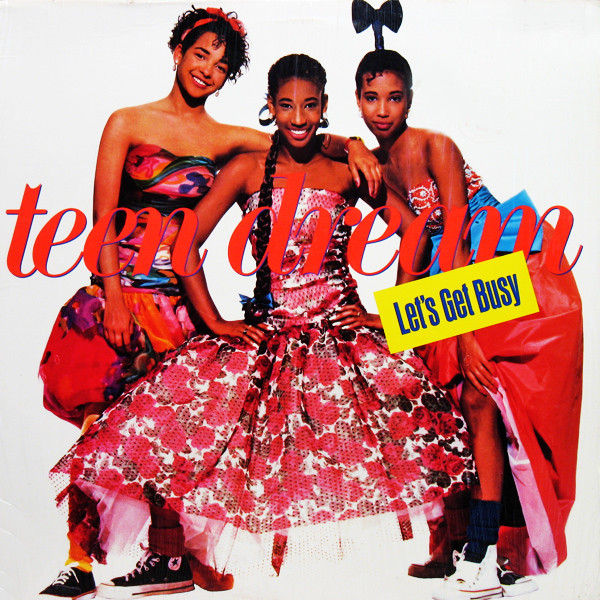
The group’s early touring was less like traditional band development and more promotional: a KDAY radio-sponsored run through Los Angeles high school cafeterias, sharing space with New Edition. Not clubs. Not theaters. Cafeterias. It’s a striking image when you think about it—teenage audiences encountering a Motown-signed Columbus funk band in a school lunchroom setting, the record label effectively swapping appearances for airplay rather than building a live following. It was during this tour that Powell dreamed up the concept that became Teen Dream.

When Koko-Pop finally surfaced in Columbus around Christmas 1984, they played Alrosa Villa — a room remembered more for hard rock and metal than polished Motown funk. Their second single was already out. “I’m In Love With You” found broader momentum, charting on Billboard and Cash Box Black singles lists and performing especially well in dance markets, reaching #11 on UK magazine Music Week's disco chart in early 1985. Could a UK tour have broken the band mainstream at this crucial moment? We can only speculate.

For Columbus music history, Koko-Pop reinforces something I keep returning to: this city has produced an astonishing number of musicians who moved within major-label ecosystems, toured with important artists, made records of genuine quality, and still somehow remain peripheral to the broader historical narrative.

Chris Powell belongs firmly in that lineage. A Marion-Franklin graduate who built a career stretching from local stages to Motown boardrooms, Powell’s story intersects with Norman Whitfield, Rick James, Teena Marie, and a version of the music industry that feels simultaneously glamorous and unforgiving.

All of this helps explain why the record's strongest personality may actually reside in Powell’s production. Powell proves remarkably assured in the producer’s chair. When you consider this is his first major production credit, it's pretty astounding. He pulls out all the stops with real strings in several spots and even bagpipes in "Make You Feel Better." Sonically, this record has serious legs. I've spent a lot of time with this record lately, and repeat listens keep revealing little pockets of ear candy. The record is of its time, sure, but the production is tight. A tip of the cap to Mr. Powell.


Still, focusing too heavily on Powell risks understating what made Koko-Pop work as a group. Songwriting credits are distributed across the band, and the record’s chemistry depends heavily on the contributions of the other players. Recco Philmore—whose bass playing, vocals, and writing are woven throughout the album—feels especially central to the group’s identity. Drummer Timmy Houpe, while not formally credited as a member on the album, brings a powerful, propulsive style that proves equally indispensable to the band's sound. Eric O’Neal’s keyboards add much of the record’s sheen and harmonic character and Keith Alexander's funky guitar chops round out a lineup whose collective musicianship helps explain why the record still feels so substantial four decades later.
The band would perform at the Newport in January of 1985 and finally start to receive some notice from Columbus media. By that point, the band was already working on demos for the next album.

Koko-Pop is one of those albums that rewards excavation: a snapshot of Columbus talent colliding with national opportunity, a document of ambition realized, though not rewarded quite to the degree its creators probably envisioned. Chris Powell got his Motown deal. Decades later, listeners and collectors are still pulling Koko-Pop from crates, rediscovering a record that carries both the confidence of seasoned musicians and the unmistakable sound of a Columbus project that actually made it farther than many remember, even if history never quite knew what to do with it.
Tracklist
A1 Baby Sister
Written-By – Eric O'Neal, Recco Philmore
A2 Serious Side
Written-By – Eric O'Neal, Recco Philmore
Written-By – Chris Powell, Recco Philmore
Written-By – Chris Powell
Written-By – Roger Penzabene, Norman Whitfield, Barrett Strong
Written-By – Recco Philmore
Written-By – Keith Alexander, Recco Philmore
B4 On The Beach
Written-By – Chris Powell, Keith Alexander
Companies, etc.
Phonographic Copyright ℗ – Motown Record Corporation
Copyright © – Motown Record Corporation
Distributed By – MCA Distributing, Inc.
Recorded At – Fiddler Studio
Mastered At – JVC Cutting Center
Published By – Stone Agate Music Division
Published By – Jobete Music Co., Inc.
Published By – KoKo-PoP Publishing Co.
Record Company – Motown Record Corporation
Credits
Producer – Chris Powell
Executive-Producer – Benny Medina, Kerry Ashby
KoKo-PoP:
Bass, Drum Programming [Linn], Lead Vocals – Recco Philmore
Keyboards, Drum Programming [Linn], Synthesizer Programming – Eric O'Neal
Guitars – Keith Alexander
Saxophone, Lead Vocals – Chris Powell

Additional Musicians:
Bass – Neil Stubenhaus
Drums – Timmy Houpe
Synthesizer Programming – Stephan Presley
Fairlight, Prophet, Yamaha DX-7 – Paul Chiten
Percussion – Terry Santiel
Background Vocals:
Recording Engineer – Steve Pouliot
Assistant Engineer – Mike Gilbert
Mixed By – KoKo-PoP, Steve Pouliot
Mastering Engineer – Joe Gastwirt
Art Direction – Johnny Lee
Design – Janet Levinson

Photography By – Ron Slenzak

Comments